

A lot of people get a 10-year B1/B2 visa, and there's a customary perception:
As long as the visa remains in force, it will last six months each time it enters the United States.
It was even felt that it would be possible to arrange for them as long as they passed the customs clearance, had the luggage taken and had left the airport.
But that is not the case.
The United States 10-year visa does not amount to ten years of residence and 180 days is not a fixed entitlement for each entry. At the time of each entry, the ultimate stay remains to be determined on a case-by-case basis by United States Customs and Border Protection (CBP) officers.
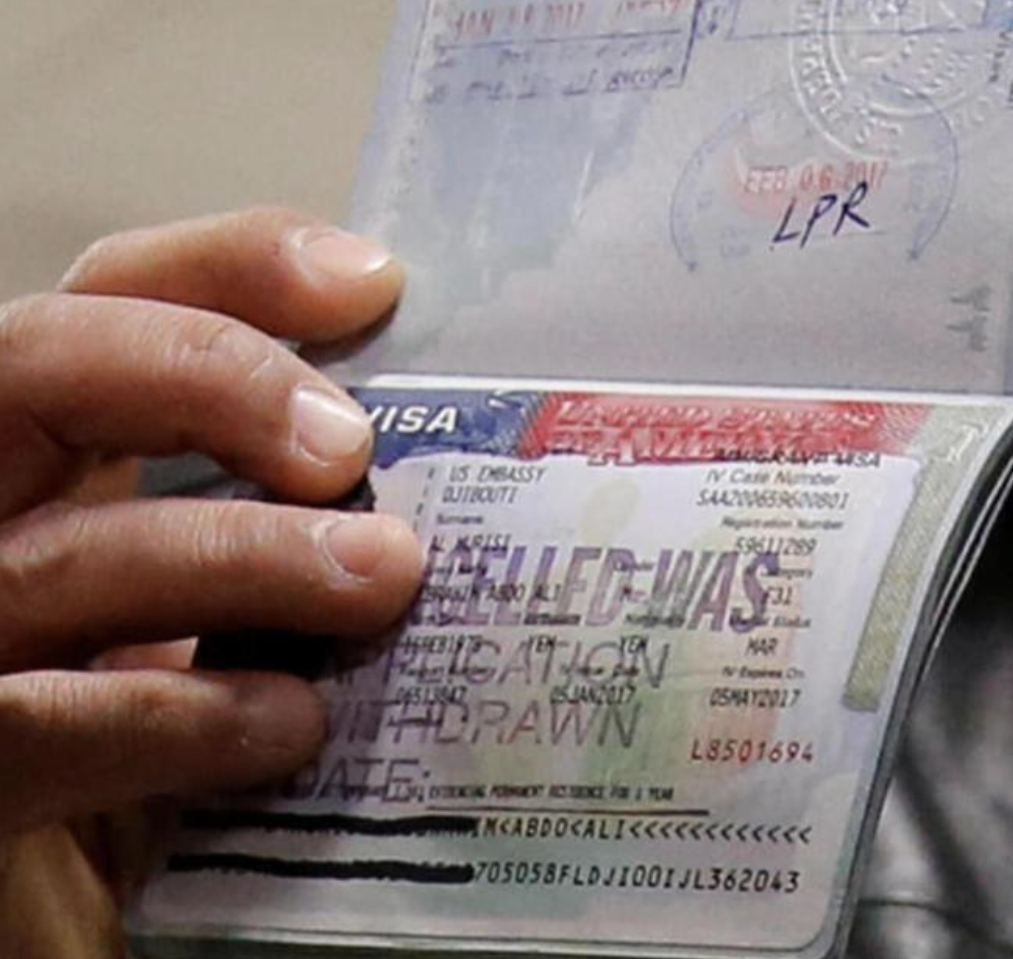
Of particular note is the fact that many United States airports no longer have passport-based entry stamps for regular arrivals. If the customs officer specifically intended to stamp your passport, even handwritten several letters and dates, it must be carefully examined.
These seemingly insignificant notes in English may have a direct impact on the length of your stay, or even on the possibility of using a 10-year sign again in the future.
I. What does the presence of these notes in English mean?
First, it should be made clear that this type of language belongs to special notes made by customs officials upon entry into the country, either on or next to the entry stamp.
The following are more common:
1. LTD STAY: Limiting the duration of stay
LTD STAY is usually an abbreviated form of Limited Stay, meaning that only short-term stay is allowed for this entry.
Under normal circumstances, part B1/B2 visitors may be granted a maximum of six months' stay, but if the Customs deems it necessary to shorten the stay, only 14 days, 30 days, or other shorter periods may be granted.
In other words, you can stay for a few months after someone else enters the country.
2. NO AOS / EOS / COS: restricted identity-related applications
The abbreviations represent:
AOS (Adjustment of Status): Status adjustment, e.g. application for permanent resident status in the United States.
EOS (Extension of Stay): Application for extension of stay.
COS (Change of Status): Application for non-immigrant status.
If NO AOS / EOS / COS appear on the passport, this usually means that the customs officer imposes a relevant restriction on this entry and does not allow you to change your status or stay after this entry.

3. NO EOS: Not allowed to apply for extension
This note requires particular attention.
It means that this entry is restricted by the non-renewal of stay. Even if it had been planned to stay in the United States for a few months, it would not be possible to follow the normal visitors ' thinking that I-539 applications for extensions could be submitted by the due date.
It should be emphasized that the specific legal effects of these notes, combined with the entry records, the applicable regulations and the circumstances of each case, cannot be inferred from the fact that all subsequent applications are necessarily prohibited by mere letters.
Why are these notes coming?
This is usually related to the determination of customs officials as to the purpose of entry of passengers and the plans for their stay.
For example:
Frequent travel to and from the United States at short notice;
(b) The length of the last stay in the United States;
Just after leaving the United States, they re-entered the country;
It is not possible to justify the purpose of this visit to the United States and the expected duration of the stay;
Officials suspect that passengers are in fact subject to permanent residence or other immigration tendencies.
In short, Customs may not consider you fit for a regular stay period this time, and therefore further clarify the conditions for this entry by means of a note.
II. The most vulnerable places: what about the discrepancy between passport handwritten dates and I-94?
This is the one thing that needs most attention.
Many know that electronic I-94 records should be consulted when entering the United States, because Admit Until Date on I-94 is an important basis for judging the legal duration of a stay.
However, if there is a handwritten date on the passport of the customs officer and it is inconsistent with the date shown electronically in I-94, it cannot simply be assumed that what is shown in the system will last until such time.
For example:
Electronic I-94: 30 May 2027;
Passport handwritten note: 1 December 2026.
At this point, do not think that you can stay in the United States until 30 May 2027.
If a handwritten note does indeed constitute a valid stay limit for this entry, a shorter period of time must be observed.
In cases where two dates were inconsistent, it was not self-decided which one was effective, and it was recommended that it be verified in a timely manner with the CBP and, if necessary, with a professional immigration lawyer.
Why not ignore this date?
For example:
A 10-year-old passenger who spent almost five and a half months in the United States the previous year returned home only four months before returning to visit his family again.
At the time of entry, customs asked how long this was scheduled.
He indicated that he would be back soon after two weeks.
Customs eventually allowed entry, but a short departure date was included in the passport, with a note NO EOS.
Passengers did not look carefully at their passports to believe that the electronic I-94 still showed that they could stay for six months, and then cancelled their return tickets after entering the country in order to continue living with their families in the United States for several months.
As a result, only two weeks had been allowed to stay, and several months had elapsed.
Such acts could have very serious consequences.
First: a 10-year dollar signature may automatically expire.
Under section 222 (g) of the United States Immigration and Nationality Act, non-immigrant visa holders usually automatically lapse if they exceed the authorized stay period.
This means that even if your 10-year dollar signature would have expired several years ago, it could have been rendered ineffective by a late stay.
Second: may trigger a 3- or 10-year ban on entry.
According to article 212 (a) (9) (B) of the Immigration and Nationality Act:
(b) Illegal detention for a cumulative period of more than 180 days but less than one year may trigger a three-year entry restriction upon departure;
Illegal detention cumulatively amounts to one year or more and may trigger a 10-year entry restriction after departure.
There is also an easy-to-neglected detail: the relevant three-year or ten-year restriction is usually calculated from the date of departure from the United States.
However, the automatic expiry of a visa and the prohibition of entry for three or 10 years is not the same legal consequence. The former may take place after the period of authorized stay has expired, while the latter also have to meet the corresponding period of illegal stay and legal conditions.
So don't hold on to the idea of just a few days.
III. NO EOS, could you apply for an extension?
This is the main concern of many visiting, accompanying and permanent visitors to the United States.
The answer is: it cannot simply be said absolutely not, but the difficulty of the application and the legal risk need to be carefully assessed.
The fact that NO EOS is a restrictive note attached to entry does not mean that the letters alone make it possible to conclude that there is no possibility of applying for relief under any circumstances.
In practice, however, it is not easy to obtain approval.
Because such comments often mean that customs officials have expressed doubts about your plans for stay or your immigration preferences at the time of entry.
If an application for an extension is submitted after entry, the Migration Board may review the passport note, the entry record, the previous stay and the grounds for the application.
Under what circumstances can it be considered?
For example:
(a) Serious illness upon arrival requiring hospitalization;
Major accidents have caused the temporary inability to fly;
There are other unforeseen special situations where it is indeed necessary to continue to do so.
These circumstances require adequate medical certificates or other objective information, which does not imply that approval must be granted.
There is also a particularly important time issue.
Assuming that your I-94 would have expired on 10 December, you submitted an extension request before that date and stayed in the United States pending the outcome.
It was not until March of the following year that the Migration Board issued a notice of refusal.
In the case of timely and eligible requests for extensions, special rules for the calculation of illegal stay are usually involved during the hearing, but this does not mean that the applicant automatically receives a new stay permit during the waiting period.
Once the application is rejected, the lawfulness of the subsequent stay, the occurrence of illegal stay and the triggering of the visa expiration need to be judged in relation to the specific reasons for refusal, the duration of the stay and the relevant legal provisions.
Therefore, it is not recommended that the submission of an extension request be considered as a guarantee of assurance of continued presence in the United States.
If there are no special reasons for genuine urgency, the safest way to leave the country is to comply with customs-approved deadlines.
Four, once you're in the U.S., do these four things!
Whether you travel to the United States, visit your family, or stay with children studying in the United States, the following habits are recommended.
First step: Once out of customs, the passport is checked.
If you don't get your bags, you leave the airport.
Find a convenient place to check visa pages on passports and adjacent blank pages.
Focus on three places:
Is there a stamp for this entry;
Whether there is a handwritten acronym in English;
Is there an additional date or period of stay indicated.
If any handwritten content is found, it is recommended that photographs be kept immediately and, if necessary, that the specific meaning be confirmed to professionals.
Step 2: Query electronic I-94 as soon as possible.
U.S. official I-94 search site:
https://i94.cbp.dhs.gov/

Upon entering the website, the most recent entry records are consulted, focusing on:
Admit Until Date (allowed to stay).
This date was checked against the handwritten notes on the passport.
If the two dates are inconsistent, the choice of a later date should not be unauthorized as a time limit for departure, and should be verified in a timely manner with the CBP.
Step 3: Discovering restrictive comments and not prolonging the journey without permission.
If the LTD STAY, NO EOS etc. appear on the passport, or if a shorter date of stay is specified, the journey is not arranged along the lines of an ordinary six-month stay.
Do not arbitrarily cancel return tickets, let alone assume that passport restrictions can be ignored as long as I-94 does not expire.
If there are specific circumstances requiring continued stay, professional immigration lawyers should be consulted as soon as possible and the existence of legal treatment verified.
Step four: A proper account of the plan is given at the time of entry.
This is, in fact, more important than ex post remedies.
If there was a plan to spend three months with the child in the United States, the three-month plan should be presented in the true light.
Instead of deliberately buying a two-week ticket for a six-month stay, the Customs Department indicated that it would soon return home.
The customs officer will conduct a comprehensive examination of the purpose of your entry, your entry and exit records, your stay in the United States and the arrangements for this trip.
If there is a clear inconsistency between the actual plan and the statement made at the time of entry, it can easily give rise to additional scrutiny.

Five or ten years is not a United States long-term residence permit.
Finally, I would like to remind you of a few very easy places to step on:
Zone of error 1: Ten-year sign-off, six months each.
Wrong! A visa is valid for 10 years and does not represent a stay of 180 days per entry. The time limits are determined by customs.
Error 2: stay as long as I-94 shows no expiry date.
Wrong! If there are valid special restricted notes on the passport, the date on the electronic system cannot be seen alone. Conflicts should be verified with the CBP in a timely manner.
Zone 3: Successful entry allows delegates to modify their itinerary at will.
Wrong! The conditions of stay authorized upon entry must be observed. Unauthorized change of plans after entry may have serious consequences.
Mistake 4: One more day, no impact.
Wrong. Exceeding the authorized stay period could lead to the automatic expiration of non-immigrant visas. With regard to entry restrictions of 3 or 10 years, the corresponding illegal detention conditions are met.

Many people have spent a lot of time and effort preparing materials, filling in DS-160 and participating in face-marks to get a 10-year United States signature.
But what is really easy to ignore is often not the visa application stage, but after entry.
In particular, friends who travel to and from the United States on a regular, permanent visit and accompany, do not use the 10-year United States dollar as a pass to stay indefinitely and permanently.
The validity of visas, entry permits and the actual period of authorized stay are three different concepts.
Upon entry, the passport is checked after exit, the I-94 is checked in a timely manner and the departure time is scheduled in accordance with the time allowed.
These seemingly simple things may determine whether you will be able to travel to the United States in the coming years.